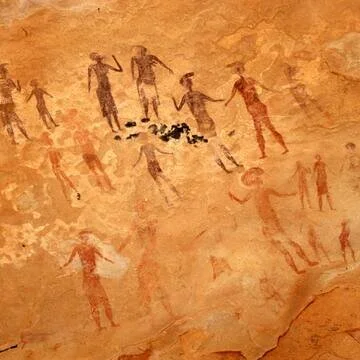
Tassili n'Ajjer, in Sahara, the biggest prehistoric cave art museum in the world
8,000 years of human history recorded in stone, deep in the Sahara


In the heart of the Sahara Desert, on a plateau of eroded sandstone forming "forests of rock," lies the most extensive collection of prehistoric art on Earth. Tassili n'Ajjer preserves a visual archive of climate change, animal migrations, and human evolution spanning 8,000 years—from 6000 BC to the first centuries of the present era.
The Scale
15,000+ Drawings and engravings documented across the plateau: a continuous record of human presence, thought, and observation across millennia.
What the Art Records
The paintings and engravings document:
Climatic transformation - When the Sahara was green, supporting rivers, lakes, and diverse wildlife
Animal migrations - Species that once thrived here: elephants, giraffes, cattle, now vanished from the region
Human evolution - Hunting scenes, pastoral life, ritual practices, technological development
Cultural changes - Shifts in lifestyle from hunter-gatherers to pastoralists as the climate dried
The Landscape
Tassili n'Ajjer sits within a strange, lunar landscape of outstanding geological interest. Erosion has carved the sandstone into dramatic formations—towering rock pillars, natural arches, stone forests. The art exists within this alien terrain, protected by overhangs and sheltered rock faces.
Location: Tassili n'Ajjer National Park, southeastern Algeria, Sahara Desert
UNESCO World Heritage Site: Recognised for both cultural and geological significance
Period represented: Approximately 6000 BC - early CE (8,000+ years)
The Images
The art reveals a Sahara unrecognisable to us today—lush, populated with megafauna, sustaining human communities for thousands of years before desertification transformed the region into the desert we know.