Water and its Atypical Physical Properties: The Mpemba Effect
Water holds a key role in many spiritualities and cultures—perhaps in all of them. It's also a substance that has challenged physics since the advent of modern science and analytic methods.
In 2013, the Royal Society of Chemistry offered £1,000 for the best and most creative explanation of the so-called Mpemba effect.
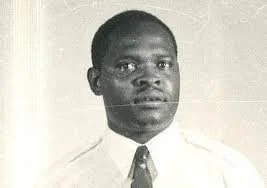
The Discovery
In 1963, Erasto B. Mpemba, a Tanzanian secondary school student, observed that hot water freezes faster than cold water despite being exposed to the same subzero temperature. Working with scientist Denis G. Osborne, he designed simple experiments: recording the time taken for two identical volumes of water—one initially warmer than the other—to cool and begin freezing.
The results were puzzling. Water initially at 80°C started to freeze three times faster than water initially at 20°C. This defies basic thermodynamic expectation: hot water should first cool to match the cold water's temperature, then freeze—always taking longer overall.

The Replication Problem
The phenomenon has been extensively investigated by physicists worldwide. Some failed to replicate the results, which led to refinements in how the effect is defined. Researchers realised that variables beyond initial temperature matter and must be controlled to observe—and explain—the phenomenon consistently.
Container shape, water purity, volume, cooling method, convection patterns, evaporation rate, dissolved gases, and nucleation sites all influence whether hot water freezes faster. The effect doesn't occur under all conditions. It's context-dependent in ways we're still mapping.
Proposed Mechanisms
Two primary mechanisms have been hypothesised:
Supercooling: Cold water can drop below 0°C without freezing (supercooling), remaining liquid until disturbed. Hot water may nucleate ice crystals more readily, beginning solidification at higher temperatures whilst cold water stays liquid below freezing.
Convection: Hot water circulates differently than cold water due to temperature gradients. These convection currents may distribute heat in ways that paradoxically accelerate overall freezing despite higher starting temperature.
Neither mechanism fully accounts for all observations. The effect likely involves multiple interacting factors.
Recent Developments
Recent studies (2019) focused on mathematical simulation of the phenomenon. The Mpemba effect is now mathematically well-characterised, leading to interesting developments and generalisations beyond water freezing. Similar "inverse thermal response" effects have been identified in other physical systems—situations where a hotter system reaches a target state faster than a cooler one.
This suggests the Mpemba effect isn't unique to water but represents a broader class of non-equilibrium thermodynamic phenomena where intuitive linear reasoning (hotter takes longer to cool) fails.
Why It Matters
Water is the most studied substance in chemistry and physics. We've mapped its phase diagrams, hydrogen bonding networks, and thermodynamic properties exhaustively. Yet this simple question—does hot or cold water freeze faster?—remained contentious for decades and isn't fully resolved even now.
The Mpemba effect reveals how complex emergent behaviour arises from seemingly simple systems. Variables we might dismiss as minor (container geometry, dissolved gas content) can flip outcomes. Linear extrapolation from equilibrium thermodynamics doesn't predict non-equilibrium dynamics.
Perhaps this is why water features so prominently in spiritual traditions. It behaves unlike other substances. Familiar yet strange. Predictable in bulk, surprising in detail. Known yet mysterious.
Try It Yourself
You can replicate Mpemba's experiments at home—with children or alone. Simple tutorial available demonstrating the effect under controlled conditions. Science remains accessible to careful observation, just as it was for a Tanzanian student in 1963 who refused to dismiss what he saw.
References
Good review of the history of the Mpemba effect: here.
Original Mpemba and Osborne paper here.
Tutorial for home experiments: here.